
UL489 miniature circuit breaker for branch circuit protection in low-voltage electrical systems
Need Miniature Breakers?
Get Mini Breaker Quote- Introduction to ABB UL489 Miniature Circuit Breakers for Branch Circuit Protection
- What Are ABB UL489 Miniature Circuit Breakers?
- Why a UL489 Listed Miniature Circuit Breaker for Panelboards Matters
- ABB DIN Rail UL489 Breaker Specifications You Should Actually Care About
- Where Industrial UL489 Miniature Circuit Breakers ABB Get Used
- Trip Curves: How You Prevent Nuisance Trips (Without Oversizing)
- How to Select the Right ABB UL489 Breaker for Branch Circuit Protection
- Installation Tips (So You Don’t Have to Redo Anything)
- Table – ABB UL489 Mini Breaker Selection Quick Reference
- Real-World Benefits You’ll Notice
- When Should You Use UL489 Miniature Breakers?
- Final Thoughts
- FAQ
- Glossary
Industrial Power Distribution • Switchgear • Protection
Introduction to ABB UL489 Miniature Circuit Breakers for Branch Circuit Protection
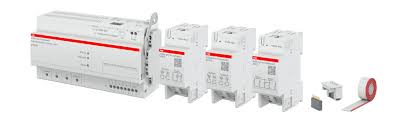
If you build panels, troubleshoot equipment, or maintain facilities, you can’t afford guesswork in protection. ABB UL489 miniature circuit breakers are designed to interrupt faults, handle everyday overloads, and keep branch circuits protected in a compact DIN-rail form factor. In other words: they’re small, but they’re built for real work.
In this guide, you’ll learn how a UL489 listed miniature circuit breaker for panelboards fits into your design, what specs matter most, and how to choose the right breaker without overcomplicating it. You can also browse ABB breakers by family if you’re comparing options. For official references, see ABB’s UL489 miniature circuit breakers page and the ABB UL489 PDF.
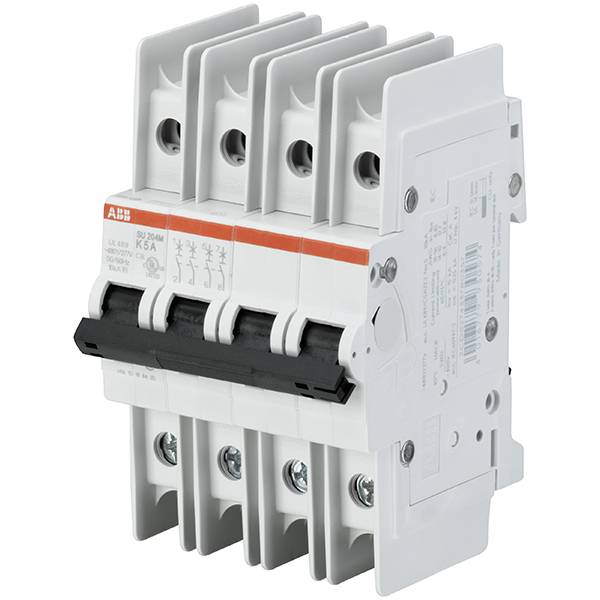
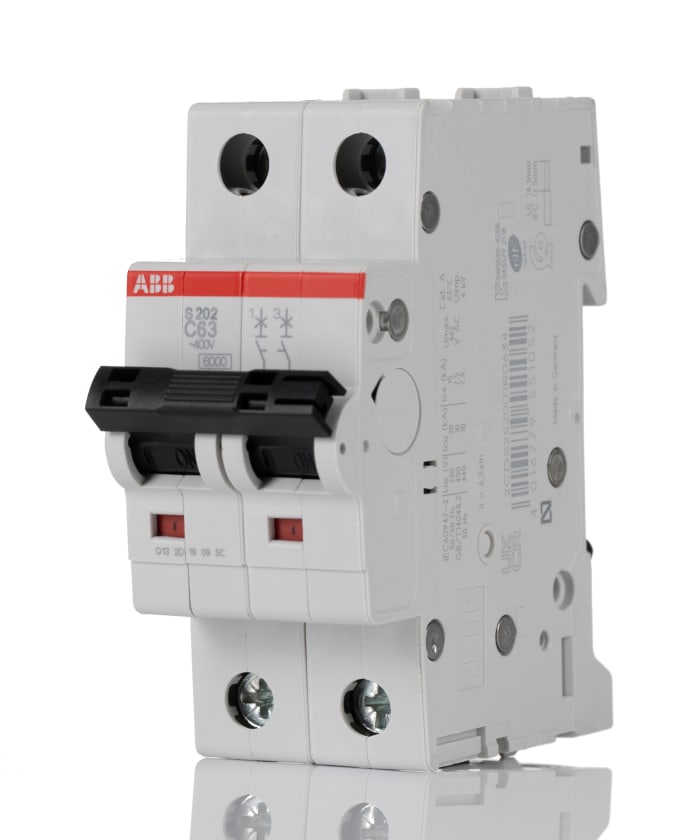
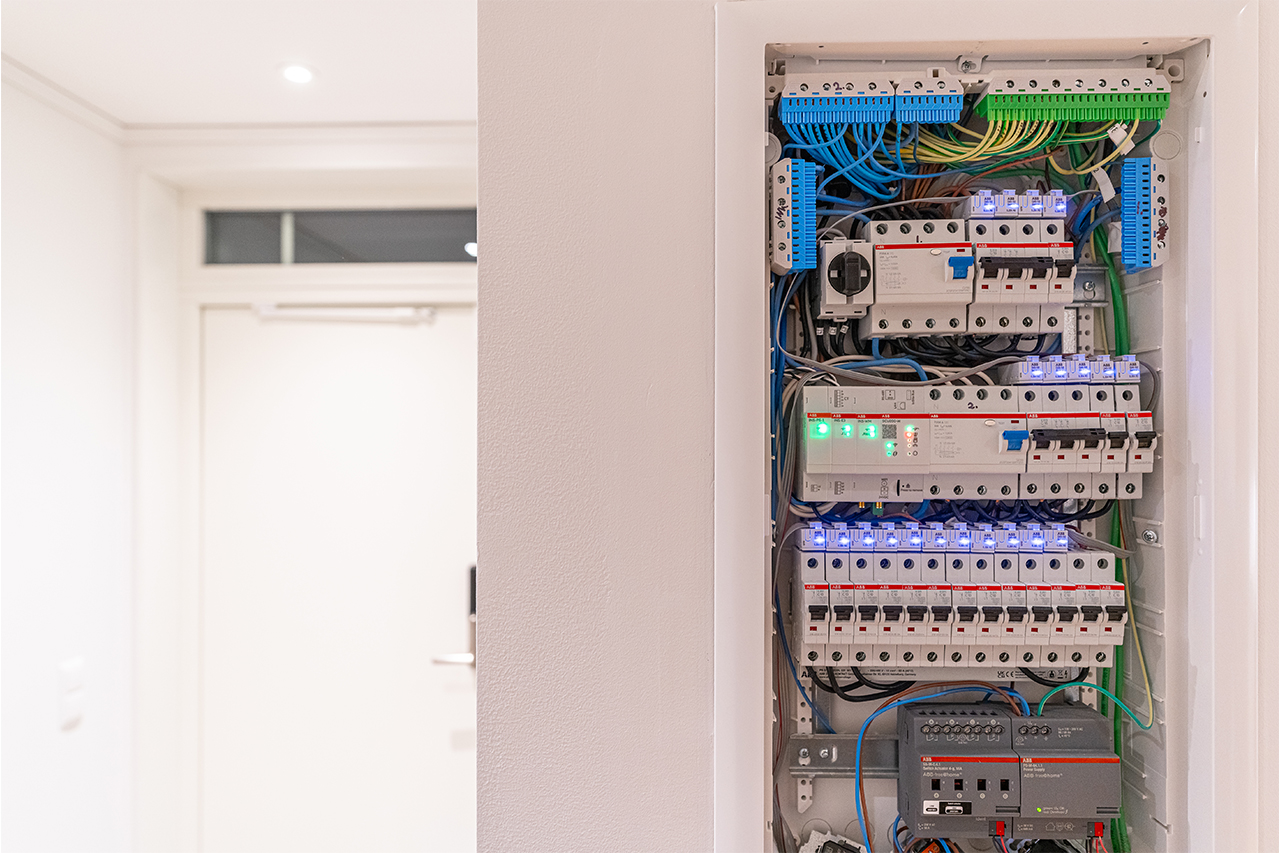
What Are ABB UL489 Miniature Circuit Breakers?
A miniature circuit breaker (MCB) is a compact overcurrent protection device that automatically opens the circuit when current rises beyond safe limits. You’ll see them in control panels, OEM equipment, and distribution assemblies because they’re quick to mount, easy to replace, and clean to wire.
The big takeaway is this: ABB UL489 miniature circuit breakers are intended for branch circuit protection, not just internal equipment protection. That matters because UL489 listing is tied to performance tests for interrupting fault current safely and consistently—exactly what you want protecting conductors and loads downstream.
You’ll commonly see UL489 MCBs used in:
- Industrial control panels and automation skids
- Commercial distribution boards and panelboard subcircuits
- OEM machinery and packaging equipment
- HVAC auxiliaries (fans, pumps, controls)
- Instrumentation, PLC power, and small feeders
Because they’re modular, you can often pair them with accessories (depending on series) like auxiliary contacts, shunt trips, or busbars, so your protection and signaling can scale with your project.
Why a UL489 Listed Miniature Circuit Breaker for Panelboards Matters
In North American installations, certification isn’t a “nice to have.” It’s part of how you reduce risk, pass inspection, and protect the people operating the equipment. A UL489 listed miniature circuit breaker for panelboards is tested for branch circuit duty—meaning it’s evaluated for interrupting capability, endurance, temperature performance, and reliable operation under fault conditions.
If you’ve ever seen a breaker that nuisance-trips during normal operation (or worse, doesn’t clear a fault the way it should), you already know why listing and proper selection matter. With ABB UL489 breaker for branch circuit protection applications, you’re aiming for dependable clearing of overloads and short circuits, without oversizing your protection and leaving conductors exposed.
Practical UL489 benefits you’ll notice:
- More confidence in short-circuit interruption performance
- Clearer alignment with electrical code expectations
- Better protection coordination for branch circuits
- Fewer “is this acceptable?” questions during turnover
If you want a quick refresher on miniature breakers and selection basics, this miniature circuit breakers resource is a helpful starting point.
ABB DIN Rail UL489 Breaker Specifications You Should Actually Care About
Specs can feel like noise until you’re standing in front of a panel deciding what to install. The good news: you don’t need to memorize everything. You just need to focus on the few ABB DIN rail UL489 breaker specifications that determine safety, compatibility, and performance.
Start with these five:
- Current rating (A) — sized to the circuit and conductor
- Voltage rating — matched to the system (and poles)
- Interrupting rating (kA) — must meet or exceed available fault current
- Trip characteristic / curve — helps avoid nuisance trips on inrush loads
- Poles — 1P, 2P, 3P, or 4P depending on the circuit
For contractors, DIN rail mounting keeps assemblies clean, makes replacement faster, and helps you standardize your panel builds. For end users, the win is uptime—when protection is selected correctly, it trips when it should and stays closed when it shouldn’t trip.
Where Industrial UL489 Miniature Circuit Breakers ABB Get Used
You’ll see industrial UL489 miniature circuit breakers ABB products everywhere a builder needs compact branch protection and fast serviceability. They’re especially common when a control panel needs multiple protected circuits without the footprint of molded-case devices.
Typical real-world use cases include:
- Control power for PLCs, I/O, and power supplies
- Auxiliary circuits (fans, heaters, lighting inside enclosures)
- OEM machinery where modular replacements keep downtime low
- Skids and packaged systems that need standardized protection blocks
- Commercial distribution subcircuits where panel space is limited
If you’re comparing breaker families and want a broader catalog view, you can reference the ABB Circuit Breakers Catalog for related product lines.
Trip Curves: How You Prevent Nuisance Trips (Without Oversizing)
Remember: not all loads behave the same. Some loads start smoothly. Others slam the circuit with inrush current—motors, transformers, and some power supplies can do that. Trip curves exist so your breaker doesn’t open during normal startup, but still opens fast when there’s a real fault.
A simple way to think about curves:
- Curve B — faster tripping, good for resistive loads and lighting
- Curve C — general-purpose, common for control panels and mixed loads
- Curve D — higher inrush tolerance, often used for motors/transformers
When you match curve to load, you’ll get fewer headaches: fewer nuisance trips, cleaner commissioning, and more predictable protection behavior.
How to Select the Right ABB UL489 Breaker for Branch Circuit Protection
If you want a practical selection workflow, keep it simple and repeatable. You’re not trying to “over-engineer” a breaker—you’re trying to match protection to conductors and loads while meeting listing and fault requirements.
Use this step-by-step selection checklist:
- Confirm system voltage and whether you need 1P/2P/3P/4P
- Size amperage to the circuit (and conductor) so it protects wiring properly
- Verify interrupt rating meets available fault current at that location
- Select the trip curve based on the load (resistive vs inrush)
- Check physical fit (DIN rail space, busbar compatibility, enclosure constraints)
When you do those five things, you’re 90% of the way there. The rest is making sure the part number and accessories match your build standard. If you need a fast refresher, this mini circuit breaker quick-start guide is a handy reference.
Installation Tips (So You Don’t Have to Redo Anything)
DIN rail breakers are quick to install, but a few habits can save you time and callbacks. You don’t need fancy tricks—just consistent best practices.
- Make sure the breaker is fully seated on the DIN rail (no “half-clips”)
- Follow manufacturer torque specs on terminals (it matters more than people admit)
- Label circuits clearly so troubleshooting doesn’t become detective work
- Keep wiring neat—tight bends and crowding can cause heat and service issues
- Leave room for expansion if the panel will grow over time
If you’re building multiple panels, standardizing on a few ABB DIN rail UL489 breaker specifications (common amps, curves, poles) can speed up quoting, assembly, and spares planning.
Table – ABB UL489 Mini Breaker Selection Quick Reference
Use this as a practical spec checklist when selecting a breaker for your circuit and load type.
| Selection Factor | What You’re Matching | Common Options | Why It Matters |
|---|---|---|---|
| Amperage (A) | Circuit load + conductor sizing | 6A, 10A, 16A, 20A, 30A, 40A, 63A | Prevents overheating while avoiding nuisance trips |
| Voltage Rating | System voltage + phase configuration | 120/240V, 277/480V (varies by series) | Ensures the breaker is applied within listing |
| Poles | 1Φ, 3Φ, neutral switching needs | 1P, 2P, 3P, 4P | Matches the circuit and disconnect requirements |
| Interrupt Rating (kA) | Available fault current at install point | Typically 10kA or higher (series dependent) | If kA is too low, the breaker may not clear safely |
| Trip Curve | Load behavior (inrush vs resistive) | B (fast), C (general), D (high inrush) | Right curve helps stop nuisance trips without oversizing |
| Mounting & Accessories | DIN rail fit + signaling/shunt needs | DIN rail, busbars, aux contacts (series dependent) | Makes installation faster and maintenance simpler |
Looking for an ABB Circuit Breakers Catalog?
Real-World Benefits You’ll Notice
When you install ABB UL489 miniature circuit breakers, you’ll quickly see why panel builders keep them on the shelf:
- Compact footprint helps you fit more protected circuits in less space
- DIN rail mounting makes replacements fast when downtime isn’t an option
- Clear ON/OFF indication improves troubleshooting (especially in tight enclosures)
- Trip curve options let you match protection to the load instead of guessing
- Strong branch circuit performance supports safer systems and cleaner turnarounds
For end users, it’s simple: you get safer operation and fewer “mystery shutdowns” caused by mismatched protection.
When Should You Use UL489 Miniature Breakers?
You’ll find a UL489 listed miniature circuit breaker for panelboards especially useful when:
- Panel space is limited but you still need robust branch protection
- You want modular circuits that are easy to service and standardize
- Loads vary widely (controls, power supplies, motors, heaters)
- You’re building OEM equipment and need clean, repeatable designs
- Compliance with UL489 listing is required for your application
In many builds, UL489 MCBs complement molded-case breakers: MCCBs handle larger feeders, while miniature breakers provide precise protection across multiple branch circuits.
Final Thoughts
If you want compact, dependable, and standards-aligned protection for low-voltage circuits, ABB UL489 miniature circuit breakers are a smart place to start. Focus on the key specs—amps, voltage, poles, kA interrupt rating, and trip curve—and you’ll be able to select the right ABB UL489 breaker for branch circuit protection without second-guessing the installation. When protection is matched correctly, your system is safer, your troubleshooting is easier, and your uptime is better.
FAQ
Glossary
UL489 — A UL safety standard for circuit breakers intended for branch circuit protection, including performance under fault interruption conditions.
Miniature Circuit Breaker (MCB) — A compact breaker designed to open automatically during overloads or short circuits, often DIN-rail mounted.
DIN rail — A standardized rail used for mounting breakers and other components inside panels and enclosures.
Branch circuit — The portion of wiring that delivers power from a distribution point (like a panelboard) to end loads.
Interrupting rating (kA) — The maximum short-circuit current a breaker can safely interrupt at a specified voltage.
Trip curve — A time-current characteristic that describes how quickly a breaker trips under different overcurrent levels.
Overload — A condition where current exceeds normal operating levels long enough to cause overheating if not interrupted.
Short circuit — A fault where current flows on an unintended low-resistance path, often producing very high current.
Poles — The number of simultaneously switched conductors (1P, 2P, 3P, 4P) a breaker opens when it trips or is turned off.