
Siemens QAF AFCI Breakers Guide

Need Siemens QAF Breakers?

Get Siemens Breaker Quote

Introduction to
Arc-Fault Circuit Protection
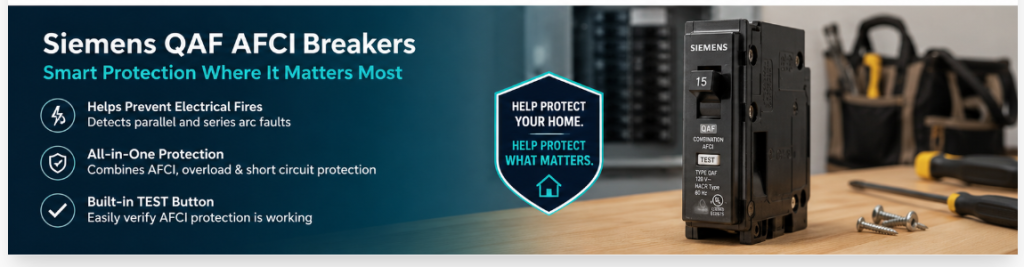
Residential Breaker protection against overloads, short circuits

Why Siemens QAF Breakers? Modern buildings rely on electricity more than ever before. Almost every space, from home offices and entertainment systems to kitchen appliances and smart home equipment, depends on consistent, reliable power. Most homes have circuit breakers as protection against overloads and short circuits, and today’s electrical codes require additional protection to reduce electrical fires.

siemens qaf afci breaker surplus

Detecting arc faults
in electrical panels

Updgrading Your Home Electrical Panel

If you’re changing an arc-fault breaker, rebuilding your home, or upgrading an electrical panel, knowing how AFCI technology works can help you pick protection for your electrical system. This tutorial describes what Siemens QAF breakers are, how they detect harmful arc faults, where they’re placed, and what to think about when buying a replacement breaker.

AFCI Protection as an important safety feature

What Is a Siemens QAF AFCI Breaker?

A Siemens QAF AFCI breaker is a Combination Arc Fault Circuit Interrupter that detects hazardous electrical arcing before it causes a fire. Unlike a typical thermal magnetic breaker, that only responds to overloads and short circuits, a QAF breaker continuously monitors the electrical current passing through a circuit for patterns indicating hazardous arc faults.

If the breaker senses harmful arcing, it cuts off electricity instantaneously, preventing excessive heat from collecting inside walls, junction boxes, outlets, or electrical devices. This extra safety lessens the risk of electrical fires that traditional breakers might not detect.

Protection beyond traditional overload and short circuits
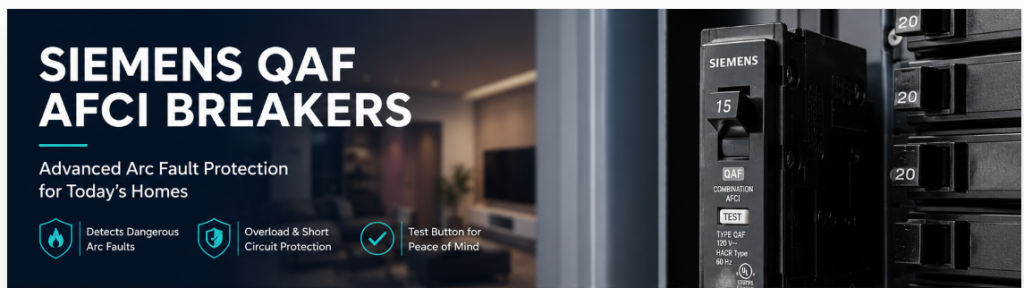
How Siemens QAF AFCI Breakers Work

Unlike traditional breakers that just monitor current levels, Siemens Arc Fault Circuit Breakers continuously analyze the electrical waveform traveling through the circuit.

Advanced electronics inside the breaker distinguish between harmless arcing created by normal household devices and the dangerous arcing from damaged wiring.
Throughout the circuit’s operation, the breaker keeps track of electrical activity. When it detects a dangerous arc fault, it cuts electricity before temperatures rise and ignite nearby goods.

siemens qaf afci breaker supply

Why Contractors Choose Siemens QAF Breakers

AdvantageHow It Benefits You
Combination AFCI ProtectionDetects dangerous arc faults leading to electrical fires before they become serious hazards.
Thermal Magnetic ProtectionProvides traditional overload and short circuit protection plus AFCI functionality.
Multiple Protections in One BreakerCombines important safety functions into a single device, reducing the need for additional protective equipment.
Plug-In InstallationInstalls in compatible Siemens load centers like a standard residential breaker, making replacement and upgrades straightforward.
Integrated TEST ButtonQuick verification that AFCI electronics are functioning as part of routine maintenance.
Compatible with Many Siemens Load CentersMakes replacing existing Siemens breakers easier without extensive panel modifications.
Supports Current Electrical CodesMeets modern AFCI requirements for residential branch circuits during new construction and remodeling projects.
Reliable Residential PerformanceDependable long-term protection in homes with today’s growing electrical demands.
Trusted by ElectriciansFamiliar installation and Siemens quality make QAF breakers a preferred choice for electrical contractors.
Greater Peace of MindConfidence electrical system is protected against overloads, short circuits, and hazardous arc faults.

AFCI protection improves
safety compliance

Common Siemens QAF Breaker Applications

Homeowners don’t think about AFCI protection until they’re completing a remodeling project or having electrical work inspected. That’s when they first learn certain living areas require arc fault protection.

Today, Siemens QAF breakers are installed on branch circuits serving bedrooms, living rooms, family rooms, dining rooms, hallways, home offices, dens, finished basements, and similar living spaces. Damaged wiring, loose electrical connections, or deteriorating cords may eventually create hazardous arcing conditions hidden behind walls or inside electrical boxes.

Select breaker for your application, meet electrical code

Siemens QAF vs. QPF vs. QP Breakers

Because Siemens offers several residential breaker families, it’s easy to confuse their functions. Siemens QAF breakers provide AFCI protection by detecting dangerous arc faults that can cause electrical fires, helping protect wiring hidden inside walls.

Siemens QPF breakers provide GFCI protection by detecting current leaking to ground, reducing the risk of electrical shock in kitchens, bathrooms, garages, laundry rooms, and other damp locations. Standard Siemens QP breakers provide overload and short circuit protection but don’t include AFCI or GFCI functionality.

15-amp or 20-amp single-pole AFCI breaker selection

Choosing the Correct Siemens QAF Breaker

Choosing the right breaker involves more than matching the amperage. Before purchasing a replacement, verify that your electrical panel is compatible with Siemens QAF breakers and confirm the correct breaker rating for the circuit.

Most homes use 15-amp or 20-amp single-pole AFCI breakers, but panel compatibility should always be confirmed. When replacing an existing breaker, match the original catalog number whenever possible, especially in older electrical systems where obsolete models may still be in service.

Popular Siemens QAF Breaker Part Numbers

Part NumberPolesAmpsVoltageDescription
Q115AF115A120VBranch/Feeder AFCI breaker
QA115AF115A120VCombination AFCI breaker
Q115AFC115A120VCombination AFCI breaker
Q120AF120A120VCombination AFCI breaker
QA120AF120A120VCombination AFCI breaker
Q120AFC120A120VCombination AFCI breaker

Relectric has a broad inventory of new, older, and hard to find Siemens Breakers. Get detailed specs and design information on hundreds of new and surplus breakers certified to your specifications.

Frequent tripping doesn’t mean breaker failure.

Your Siemens AFCI Breaker May Need Replacement

Circuit breakers are designed to provide years of dependable protection, and like any electrical device, they can eventually require replacement. If your breaker trips repeatedly without an obvious cause, refuses to reset, fails its built-in TEST function, or shows signs of overheating, corrosion, or physical damage, it should be inspected before being returned to service.

It’s important to remember that frequent tripping doesn’t necessarily mean the breaker has failed. In many situations, the breaker is doing exactly what it was designed to do by identifying an unsafe electrical condition somewhere on the circuit. Instead of resetting the breaker, determine the underlying cause so the problem can be corrected.

Learn more about Common Circuit Breaker Problems and Troubleshooting.

Arc-Fault
Circuit Interrupter Install Instructions

Installation and Safety Tips

Replacing a circuit breaker may seem simple, but electrical panels can remain hazardous even after individual breakers are switched off. Before beginning, turn off the main disconnect, verify the panel is de-energized, and follow Siemens Arc-Fault
Circuit Interrupter installation instructions
.

After installation, tighten terminals to the recommended torque, test the breaker using the integrated TEST button, and never substitute another manufacturer’s breaker unless it’s approved for your panel. If you’re unsure,

Protect your home with the right Siemens QAF breaker. Choosing the correct replacement helps improve electrical safety, reduce the risk of arc fault fires, and keep your residential electrical system protected.
What is a Siemens QAF AFCI breaker?
A Siemens QAF AFCI breaker is a Combination Arc Fault Circuit Interrupter that detects dangerous electrical arcing while also providing traditional overload and short circuit protection. It’s designed to help reduce the risk of residential electrical fires.
What’s the difference between a Siemens QAF breaker and a QP breaker?
A Siemens QP breaker provides overload and short circuit protection only. A Siemens QAF breaker includes those same protections while also detecting hazardous arc faults that standard breakers can’t identify.
What’s the difference between Siemens QAF and QPF breakers?
QAF breakers provide Arc Fault Circuit Interrupter protection to help prevent electrical fires. QPF breakers provide Ground Fault Circuit Interrupter protection to help protect people from electrical shock in wet or damp locations.
Where are Siemens QAF breakers typically installed?
They’re commonly installed on residential branch circuits serving bedrooms, family rooms, living rooms, dining rooms, home offices, hallways, finished basements, and other living spaces where AFCI protection is required by current electrical codes.
How do I know if my Siemens AFCI breaker needs replacement?
A breaker may need replacement if it won’t reset, repeatedly fails the TEST function, shows visible damage or overheating, or no longer operates properly. Frequent tripping may also indicate an electrical problem on the circuit.
Can I replace a Siemens QP breaker with a Siemens QAF breaker?
In many cases, yes, if your Siemens load center is listed for QAF breakers and local electrical code requires AFCI protection. Always verify panel compatibility before installing any replacement breaker.
How often should I test a Siemens QAF AFCI breaker?
Siemens AFCI breakers should be tested periodically using the built-in TEST button. Many electricians recommend monthly testing to confirm the breaker’s electronic protection is operating correctly.

Terms You Should Know

TermDefinition
AFCIArc Fault Circuit Interrupter designed to detect hazardous electrical arcing that could lead to a fire.
Arc FaultAn unintended electrical discharge that generates excessive heat and may ignite nearby combustible materials.
Combination AFCIAn AFCI breaker that detects both series and parallel arc faults while also providing overload and short circuit protection.
Parallel Arc FaultElectrical arcing between two conductors caused by damaged insulation, pinched wiring, or moisture intrusion.
Series Arc FaultArcing along a single conductor caused by a loose electrical connection, damaged wire, or worn receptacle.
Branch CircuitThe wiring that carries electricity from a circuit breaker to outlets, switches, lighting, and connected equipment.
Thermal Magnetic BreakerA conventional circuit breaker that protects against overloads and short circuits but doesn’t detect arc faults.
Load CenterA residential electrical panel that houses circuit breakers and distributes electricity throughout the home.
UL ListedIndicates the breaker has been independently tested and certified to meet recognized safety standards.