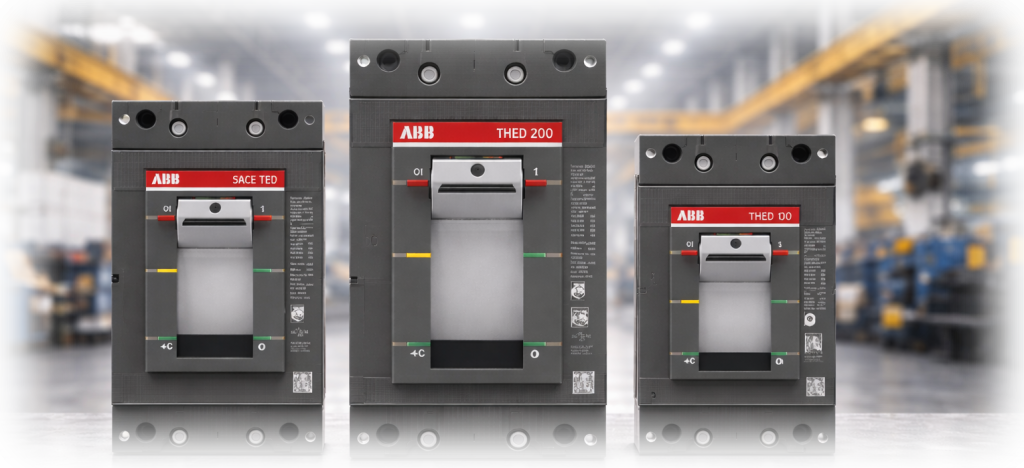
ABB E150 Thermal-Magnetic Molded Case Breakers

Need Electrical Products?

Get Quote

ABB E150 breakers are thermal magnetic to protect critical facility circuits, servers, and increase uptime.

Protection for Switchboards, MCCs, Panelboards

When you’re on the job, whether wiring a switchboard, motor control center (MCC), or panelboard, picking the right circuit breaker for circuit protection is more than just checking a box. It’s about protecting systems and people, reducing down-time, maintaining project dependability.

That’s where ABB E150 Thermal Magnetic Breakers with thermal-magnetic protection shine. These molded case breakers, available in series TEB, TED, and THED, are versatile, dependable, and designed for the commercial and industrial tasks you find every day.

Why Use ABB E150 Breakers?

Thermal-magnetic molded case circuit breakers (MCCBs) combine two core protection methods:

A thermal element that responds to prolonged overloads.

A magnetic element that instantly reacts to short circuits.

This ABB Molded Case Breaker combination means you get dependable protection against the overloads and fault conditions that damage conductors, equipment, or create safety hazards.

And because these are molded case devices, they’re rugged and compact, perfect for switchboards, MCCs and panelboards.

ABB E150 Series Breaker Series: TEB, TED, THED

When you’re choosing an E150 breaker, you’ll see part numbers and series. These thermal-magnetic E150 breakers differ in specific ratings and use cases — so you get flexibility depending on project needs.

Each of these series gives you up to 150 A ratings and up to 600 V AC, made for reverse feed applications — handy when panel layouts change on site.

THE ABB E150 Breakers Series

TEB Series — Lower voltage lighting and general distribution circuits.
TED Series — Facilities with mixed loads and MCCs.
THED Series — High interrupting rating and improved performance for rugged conditions.

Switchboards: A Foundation of Safe Power Distribution

Electrical Switchboards for power distribution are where incoming utility power is split into branch circuits. You depend on circuit breakers here to guard feeders and large loads — and ABB E150 breakers give reliable performance.

Molded case breakers reduce downtime and eliminate replacing blown fuses, keeping service calls to a minimum.

Plus, for easy reset– just flip the breaker back ON after a trip condition clears — faster than pulling and replacing fuses, especially when you’re managing lots of devices in large electrical rooms.

In panelboard applications, E150 breakers protect lighting, receptacle, and equipment branch circuits while saving space.

Motor Control Centers for Starter Circuits

In MCC applications, breakers aren’t just safety devices — they’re motor protection for starter circuits. Motors draw high inrush current, and without proper protection, a short or overload can lead to expensive downtime.

Thermal-magnetic trip characteristics of E150 breakers give overload protection and instantaneous magnetic response to faults. Combined with a compact frame, you get a solution that fits motor control lineups while improving electrical safety.

Panelboards for Branch Circuits — Safe and Organized

If you’re building lighting, receptacle, HVAC or plug-load panelboards, ABB E150 breakers series makes your circuits safer.

You’ll find E150 breakers in 1-, 2-, or 3-pole configurations.

These breaker configurations for electrical panelboards givie you versatility to handle multi-phase loads and single-phase circuits within the same breaker family. And with proper interrupt ratings, you won’t jeopardize safety to save panel space.

ABB E150 Breakers Glossary of Terms

  1. Molded Case Circuit Breaker (MCCB)
    A protective device that interrupts current flow during faults.
  2. Thermal Trip
    Overload protection using heat expansion.
  3. Magnetic Trip
    Instant trip mechanism for short-circuit protection.
  4. Interrupting Rating
    Maximum fault current a breaker can safely interrupt.
  5. Poles
    Independent current paths in a breaker (1, 2, or 3).
  6. Switchboard
    A central distribution panel for multiple breaker circuits.
  7. Motor Control Center (MCC)
    A panel system for motor control and protection.
  8. Panelboard
    A distribution panel with breakers serving branch circuits.
  9. Reverse Feed
    Breaker design that allows current to flow in both directions safely.
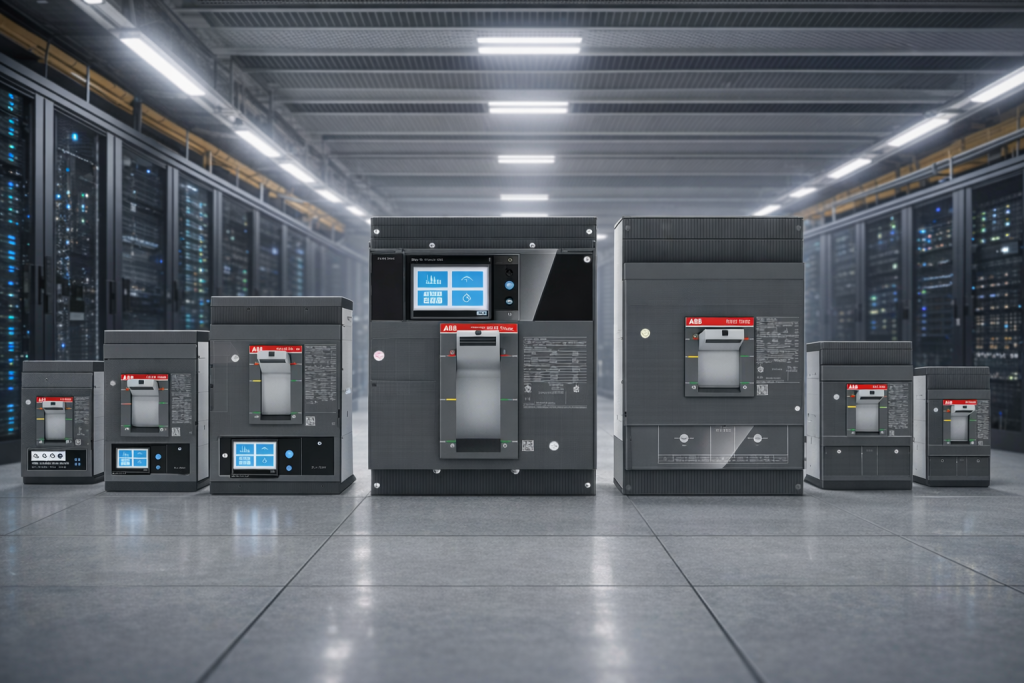
Thermal-magnetic molded case circuit breakers provide dependable protection for critical data center circuits, helping safeguard servers, power distribution equipment, and uptime against overloads and short-circuit faults.

Reliable circuit protection is essential in data centers. ABB E150 breakers are thermal-magnetic MCCBs that help protect branch and feeder circuits, reducing risk, downtime, and maintenance interruptions.

ABB Thermal Magnetic Breaker FAQ

(Click a Question)

What does “thermal-magnetic” mean?

It means the circuit breaker uses two trip mechanisms: a thermal element for overload protection and a magnetic element for instantaneous short-circuit protection.

Where are E150 breakers typically used?

E150 molded case circuit breakers are commonly used in switchboards, motor control centers (MCCs), and panelboards in commercial and industrial installations.

Can E150 breakers be used for three-phase loads?

Yes. Three-pole E150 breakers are designed specifically for three-phase electrical circuits.

Do these breakers replace fuses?

Yes. Thermal-magnetic E150 breakers eliminate the need to replace fuses after a trip—simply reset the breaker once the fault is cleared.

What amperage range is available?

E150 series circuit breakers are typically available in amperage ratings ranging from approximately 15 amps up to 150 amps.

Are these breakers suitable for reverse feed applications?

Yes. Many E150 molded case circuit breakers are designed and rated for reverse feed applications.

How do I size an E150 circuit breaker?

Proper sizing requires matching system voltage, expected load current, and coordinating interrupting ratings with your overall system design.