
ABB SACE Isomax S molded case breakers for industrial circuit protection, selection, and replacement planning
Need ABB Isomax breakers?
Get ABB Breaker Quote- ABB SACE Isomax S Molded Case Breakers: How to Choose the Right MCCB for Industrial Power Distribution
- What ABB SACE Isomax S Molded Case Breakers Give You in the Field
- ABB SACE Isomax S Specifications That Matter When You Select a Breaker
- ABB Isomax S Breaker Applications for End Users, Contractors, and Distributors
- How to Choose ABB Isomax S Circuit Breakers Without Overcomplicating the Process
- ABB SACE Isomax S Part Numbers on Relectric: Sample Models and Descriptions
- Why ABB SACE Isomax S Molded Case Circuit Breakers Still Matter
- Final Thoughts on ABB SACE Isomax S Molded Case Breakers and Replacement Strategy
- FAQ: ABB SACE Isomax S Molded Case Breakers
- Glossary: ABB SACE Isomax S Terms
Circuit Breakers • ABB Legacy Products • Industrial Power Distribution
ABB SACE Isomax S Molded Case Breakers: How to Choose the Right MCCB for Industrial Power Distribution
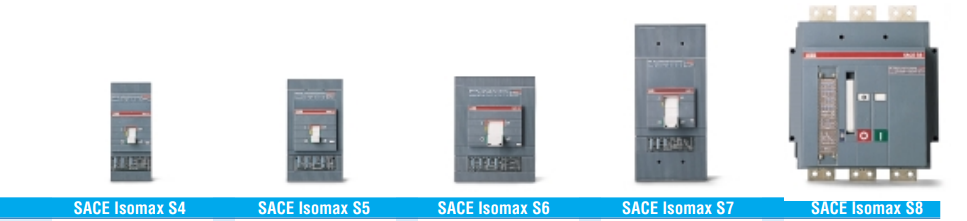
If you maintain switchgear, specify replacement breakers, or support customers with legacy ABB equipment, you need a breaker family that is easy to understand in the field. ABB SACE Isomax S molded case breakers were built to cover a broad range of low-voltage protection needs, from smaller feeders to large industrial distribution. That matters because when you are matching a replacement breaker, you are not just checking amperage. You are checking interrupting capacity, trip unit style, mounting version, and whether the breaker fits the job without forcing a redesign.
In practical terms, ABB Isomax S circuit breakers give you a modular platform with fixed, plug-in, and withdrawable options, AC and DC coverage, and frame sizes that span major industrial applications. If you are comparing this family with later ABB platforms, Relectric’s ABB circuit protection resources can help you evaluate adjacent product lines, while ABB’s SACE Isomax S legacy page and the ABB Isomax S catalog PDF are useful reference points when you need original platform details.
Key Topics: ABB SACE Isomax S molded case breakers • ABB Isomax S circuit breakers • SACE Isomax S molded case circuit breakers • ABB SACE Isomax S specifications • ABB Isomax S breaker applications
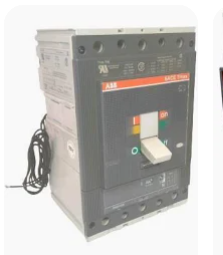
What ABB SACE Isomax S Molded Case Breakers Give You in the Field
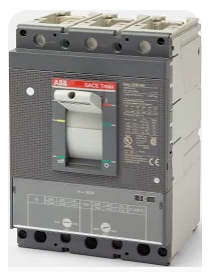
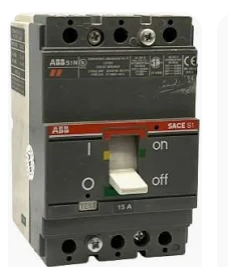
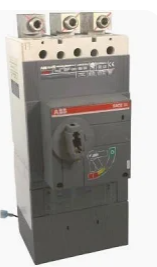
ABB SACE Isomax S molded case breakers were developed as a broad MCCB platform for low-voltage distribution, with frame sizes from S1 through S8. For you, that means one family can cover a wide mix of feeder, distribution, and motor-related protection tasks without jumping between unrelated breaker platforms.
The practical appeal is the platform logic. The series was built around modular versions, shared accessory concepts, and multiple release options. So whether you are an end user planning a replacement, a contractor building out a retrofit, or an electrical distributor helping a customer identify an obsolete part, SACE Isomax S molded case circuit breakers are easier to map than many older legacy lines.
That shows up in three ways:
- Broader frame coverage for industrial power distribution
- Multiple mounting styles for new work and retrofit work
- Release choices that support thermal, magnetic, and electronic protection needs
ABB SACE Isomax S Specifications That Matter When You Select a Breaker
You do not need every catalog line to make a good selection, but you do need the right ones. Start with amperage, voltage, interrupting rating, poles, and trip style. Then confirm whether you need fixed, plug-in, or withdrawable construction.
| Specification | ABB Isomax S Range | Why You Care |
|---|---|---|
| Current range | 125A to 3200A | Covers small through large industrial distribution breakers |
| Breaking capacity | Up to 200kA at 380/415V depending on model | Determines fault-clearing suitability at the point of installation |
| Voltage | AC and DC versions, with certain models up to 1000V AC | Helps you match the breaker to standard and specialized systems |
| Versions | Fixed, plug-in, withdrawable | Affects replacement fit, serviceability, and panel design |
| Release options | Thermomagnetic, magnetic-only, and electronic releases | Controls coordination, motor protection approach, and adjustability |
ABB Isomax S Breaker Applications for End Users, Contractors, and Distributors
ABB Isomax S breaker applications cover more ground than many people expect. The family was used in general AC distribution, selected DC distribution arrangements, motor protection, current-limiting applications, and installations that required higher system voltage coverage. For contractors, that means fewer one-off breaker families to learn. For distributors, it means easier cross-reference discussions with plant maintenance teams.
- Industrial power distribution lineups
- Legacy switchboards and panel retrofits
- Motor circuits that need coordinated protection
- Installations with higher available fault current
- Sites maintaining older ABB low-voltage systems
If you are already working through replacement options, you can also review related ABB protection families through Relectric’s ABB SACE Formula circuit protection page to help position Isomax S within a broader breaker strategy.
How to Choose ABB Isomax S Circuit Breakers Without Overcomplicating the Process
Start with the basics, then narrow the part. Confirm the system voltage and available fault current. Match the frame size to the actual load and feeder design. Check whether you need a thermomagnetic unit for straightforward protection or an electronic trip unit for more refined settings and coordination. Then confirm the mechanical format so you are not trying to force a fixed breaker into a plug-in or withdrawable position.
Use this selection workflow:
- Verify the original frame family, such as S3, S5, or S7
- Confirm amperage and poles
- Check the interrupting rating against site fault current
- Review trip unit style and functions
- Confirm terminals, mounting style, and any accessory needs
ABB SACE Isomax S Part Numbers on Relectric: Sample Models and Descriptions
Use this quick reference as a starting point when you are matching a breaker family, frame, and trip style.
| Part Number | Type | Description |
|---|---|---|
| S3H225 | S3H | 225A, 3-pole, fixed Isomax S molded case breaker with front terminals and thermomagnetic protective release |
| S5N400 | S5N | 400A, 3-pole, 600V breaker with PR211 trip, long-time and instantaneous functions, load side lug terminals, and reverse-feed suitability |
| S5N400BW | S5N | 400A, 3-pole, 600V Isomax S breaker with PR211 trip, bolt-on style, long-time and instantaneous functions, and load side lug terminals |
Why ABB SACE Isomax S Molded Case Circuit Breakers Still Matter
Legacy does not mean irrelevant. ABB SACE Isomax S molded case circuit breakers still matter because many facilities continue to operate lineups built around this family.
- They cover a large current range in one recognizable platform
- They support multiple release types and protection approaches
- They simplify replacement planning in older ABB systems
- They are useful reference points for retrofit and modernization decisions
- They help distributors and contractors speak the same language as maintenance teams
Final Thoughts on ABB SACE Isomax S Molded Case Breakers and Replacement Strategy
When you evaluate ABB SACE Isomax S molded case breakers, the real value is not just the catalog breadth. It is the fact that the family gives you a structured way to think about legacy ABB protection. You can identify the frame, verify the electrical ratings, confirm the trip approach, and move toward the right replacement or retrofit path with more confidence. For end users, that means less downtime risk. For contractors, it means fewer installation surprises. For electrical distributors, it means clearer conversations and better quotes.
FAQ: ABB SACE Isomax S Molded Case Breakers
1) What are ABB SACE Isomax S molded case breakers used for?
They are used for low-voltage distribution, feeder protection, selected motor protection applications, and legacy ABB system maintenance.
2) What current range do ABB Isomax S circuit breakers cover?
The family spans from 125A up to 3200A depending on the frame size and model.
3) Are SACE Isomax S molded case circuit breakers obsolete?
Yes. ABB lists the family as a legacy, obsolete product line, which is why correct identification and replacement planning matter.
4) Do ABB SACE Isomax S breakers come in plug-in and withdrawable versions?
Yes. The family was available in fixed, plug-in, and withdrawable versions depending on the model.
5) What trip unit options are common in ABB Isomax S circuit breakers?
The platform included thermomagnetic, magnetic-only, and electronic releases such as PR211/P and PR212/P on selected models.
6) Can ABB SACE Isomax S molded case breakers be used for motor protection?
Yes. Certain Isomax S models and releases were designed to support motor protection applications.
7) Where can you verify ABB SACE Isomax S specifications?
The best sources are ABB’s legacy product page, the ABB catalog PDF, and detailed product pages when you are matching specific part numbers.
Glossary: ABB SACE Isomax S Terms
MCCB — Molded case circuit breaker used to protect circuits from overloads and short circuits.
Icu — Ultimate short-circuit breaking capacity, which tells you the maximum fault current the breaker can interrupt.
Ics — Service breaking capacity, which reflects the breaker’s practical post-fault service capability.
Thermomagnetic release — A trip approach that combines thermal overload protection with magnetic short-circuit protection.
Electronic release — A more adjustable trip unit used on selected Isomax S frames for refined protection settings.
Plug-in breaker — A breaker format that allows easier removal and replacement than a fixed-mounted unit.
Withdrawable breaker — A breaker style designed for racking in and out of its compartment for service and isolation.
Current-limiting breaker — A breaker designed to reduce the let-through energy during a short-circuit event.
Legacy product — An obsolete or discontinued product family that still requires service, replacement, or retrofit support in the field.